Montessori vs. Performing Arts Preschool in San Jose: How to Choose
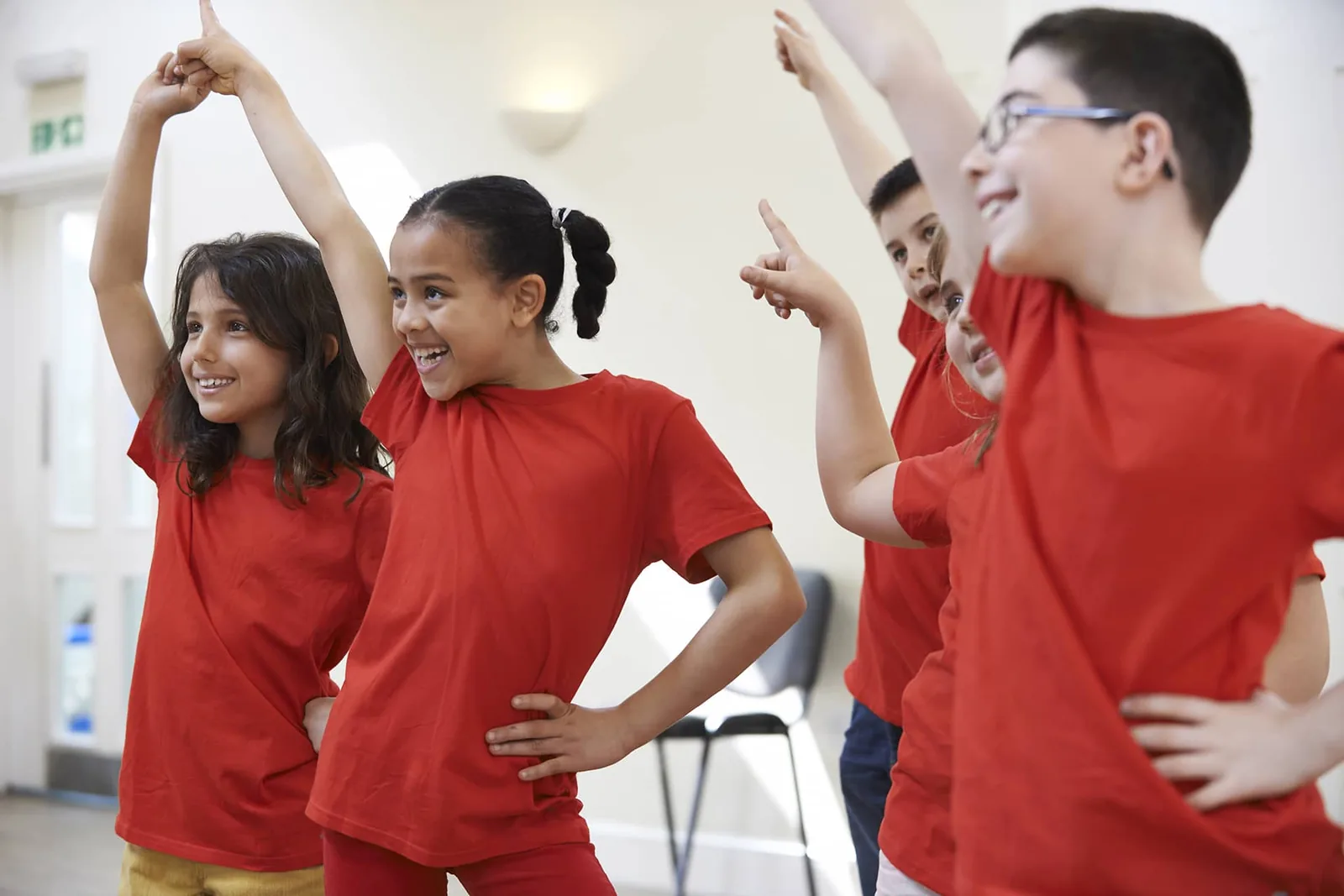
Walk into two San Jose preschools on the same morning and you might see two very different rooms. In one, children work quietly at little tables, each one absorbed in a wooden tray of beads or a pouring exercise. In the other, kids are singing, acting out a story, and switching between English and Spanish before snack. Both can be excellent. They just believe different things about how young children learn.
If you’ve been comparing “Montessori” against “play-based” or “performing arts” programs and feeling unsure which is right, you’re not behind. Most parents have never had to define these words before. This guide explains what each approach actually is, where it shines, and how to match a philosophy to your own child instead of to a label.
Montessori and play-based are real philosophies, not marketing. Each one changes how the day is structured and how teachers interact with your child.
Your child’s temperament matters more than the brand name. The same room can feel calming to one kid and boring to another.
Building Kidz is not a Montessori school. It’s a bilingual, play-based, performing-arts STEAM program, and this guide is honest about that difference.
What is Montessori preschool, really?
Montessori is a specific method developed by Dr. Maria Montessori, an Italian physician, more than a century ago. The core idea is that children learn best through self-directed activity in a carefully prepared environment. Instead of a teacher leading the whole group through one lesson, children choose their own work from a set of specialized materials and stay with it as long as they like.
A few features define an authentic Montessori classroom:
- Child-led work. Kids pick their own activities during long, uninterrupted work periods rather than following a fixed schedule.
- Mixed-age classrooms. Three-year-olds and five-year-olds often share a room, so younger children learn from older ones.
- Specialized materials. The wooden beads, sandpaper letters, and pouring trays are designed to teach one concept at a time and to be self-correcting.
- Quiet, independent focus. The room is calm on purpose. Concentration is treated as something to protect.
- Teacher as guide. Adults observe and gently introduce materials rather than direct every minute.
Done well, Montessori builds real independence, focus, and a sense of order. Many children thrive in it and carry those habits for years.
One thing to check in San Jose
The word “Montessori” is not trademarked, so any school can use it. Some are trained and accredited, and some just borrow the name. If a program’s Montessori approach matters to you, ask which teacher training and accreditation the school actually holds before you enroll.
What do play-based and performing arts preschools emphasize?
Play-based preschools start from a different belief: that guided play is the most natural way young children build language, social skills, and early academics. The day still has structure and goals, but learning is wrapped inside activities that feel like play to the child. Performing-arts and STEAM programs are a lively branch of this approach.
You’ll typically see a stronger emphasis on:
- Guided play. Teachers set up activities with a purpose, then join and extend the play with questions and new ideas.
- Music, movement, and drama. Songs, dance, and acting out stories are used to teach memory, sequencing, and confidence.
- Language immersion. Many play-based programs in the Bay Area weave a second language, often Spanish, into the regular day.
- Social-emotional learning. Sharing, turn-taking, naming feelings, and group cooperation are front and center.
- STEAM projects. Science, technology, engineering, art, and math show up as hands-on group projects rather than worksheets.
This style tends to be more social and more verbal than a classic Montessori room. Children who love an audience, thrive on group energy, and learn through talking and moving often light up here.
Montessori vs. play-based: how are they different?
The clearest way to compare them is to look at a normal Tuesday morning. The philosophies differ most in who drives the activity and how social the room feels.
Structure of the day
Montessori protects long, quiet work periods where each child chooses their own task. Play-based days move through a rhythm of group circle time, guided activities, free play, and often music or movement blocks. If your child needs predictable transitions and a bit of built-in energy, the play-based rhythm can feel more natural.
Role of the teacher
In Montessori, the teacher observes and introduces materials, then steps back. In play-based rooms, teachers are more actively in the play, modeling language and stretching ideas in the moment. Neither is “more” teaching. They’re different jobs.
How social it feels
Montessori work is often solo or side by side. Play-based and performing-arts programs are built around groups, conversation, and performance. That single difference is usually what makes one approach click for your child and the other feel off.
Is Montessori better than play-based?
No. Neither approach is better in the abstract, and any honest program will tell you the same. Research on early childhood keeps pointing back to the same fundamentals: warm and responsive teachers, small groups, and a language-rich environment. Both Montessori and quality play-based programs can deliver all three.
The better question is which one fits the child in front of you. A method is only as strong as the teachers running it and the match with your kid. A wonderful play-based program is a poor choice for a child who is overwhelmed by noise, and a beautiful Montessori room is the wrong fit for a child who needs music, movement, and an audience to stay engaged.
Which approach fits your child’s temperament?
Start with your child, not the brochure. The philosophy that works is the one that matches how your kid already engages with the world. A short, honest read of their temperament will tell you more than a tour ever could.
The quiet, focused child
If your child can sit with one activity for a long time, likes order, and gets flustered by chaos, an authentic Montessori room may be a genuine gift. The calm and the freedom to go deep suit them.
The shy or slow-to-warm child
Shy doesn’t automatically mean Montessori. Some quiet kids bloom in a gentle play-based room where music and drama draw them out at their own pace and small groups make friendship easier. Others prefer the low-pressure independence of Montessori. Watch how your child recovers in new settings, then pick the room that meets them there.
The energetic, social child
If your child narrates everything, loves an audience, and learns by doing and talking, a performing-arts or play-based STEAM program usually fits better. Long silent work periods can feel like a punishment to a kid built for movement and performance.
The child who learns through language
Children who soak up words quickly often thrive with daily language immersion. A bilingual play-based program gives them a second language during the years the brain absorbs it most easily.
Where Building Kidz fits, and where it does not
Let’s be direct: Building Kidz of San Jose is not a Montessori school, and it does not claim to be. If your heart is set on the classic Montessori method with its specialized materials and silent work periods, an accredited Montessori program is the right call, and you should choose one.
Building Kidz is a bilingual, play-based, performing-arts program built around a STEAM curriculum. English and Spanish immersion is part of every classroom day, not an add-on fee. The performing-arts curriculum runs daily and builds toward two Broadway-style productions a year that the children actually perform. There’s also a Learning Through Life Experiences program that ties lessons to the real world.
A few practical notes for local families. It’s a family-owned school, run by the Doshi family since 2019, in the Cambrian area at 4115 Jacksol Drive, right next to Houge Park for daily outdoor play. Classrooms keep small ratios, with 1:3 in infant and toddler rooms and 1:8 in the younger preschool classrooms. Hours run Monday through Friday, 7:00 AM to 6:00 PM, year-round, which helps working parents. The campus covers six months through a private kindergarten, and it’s a nut-free facility with secure pickup and daily photos through a parent app.
This approach suits a child who learns through play, language, music, and performance, and a family that wants bilingual immersion under one roof. If that sounds like your kid, a tour is the fastest way to see whether the room feels right. If a silent, materials-first Montessori room is what you picture instead, we would rather you find the program that fits.
See Building Kidz of San Jose for yourself. Tour the campus beside Houge Park, meet the teachers, and get a tuition figure tailored to your child’s age and any subsidy you qualify for. Tours run Monday to Friday at 9:30 AM, 10:30 AM, or 3:00 PM.
Schedule a Tour or call (408) 559-1003
Frequently Asked Questions
What is the difference between Montessori and play-based preschool?
Montessori is child-led work in a quiet, prepared room where children choose specialized materials and focus independently, often in mixed-age classes. Play-based preschool uses guided play, group activities, music, and movement to teach the same skills in a more social, verbal setting. The biggest difference is how the day is structured and how social the room feels.
Is Montessori better than play-based preschool?
Neither is better on its own. Both can build strong early skills when teachers are warm, groups are small, and the room is language-rich. What matters most is the match with your child. A focused, order-loving child may thrive in Montessori, while a social, energetic child often does better in a play-based or performing-arts program.
Does Building Kidz use the Montessori method?
No. Building Kidz of San Jose is not a Montessori school and does not use the Montessori method. It is a bilingual, play-based, performing-arts program built around a STEAM curriculum, with daily English and Spanish immersion and two children’s productions a year. If you specifically want Montessori, an accredited Montessori program is the better fit.
Which is better for a shy child versus an energetic child?
It depends on the individual child, not just the label. Some shy children bloom in a gentle play-based room where music and small groups draw them out, while others prefer the calm independence of Montessori. Energetic, social kids who love movement and an audience usually thrive in a performing-arts or play-based program.
What is a good Montessori alternative in San Jose?
If you want a Montessori alternative, look at quality play-based and performing-arts STEAM programs. These emphasize guided play, language immersion, music, and social-emotional learning instead of silent independent work. Building Kidz of San Jose is one bilingual, play-based option in the Cambrian area. Tour a few and match the room to your child’s temperament.
How do I tell if a “Montessori” school is authentic?
The word Montessori is not trademarked, so any school can use it. Ask which teacher training and accreditation the program holds, and look for the signature features: long uninterrupted work periods, mixed-age classes, and the specialized self-correcting materials. If those are missing, the school is Montessori-inspired at best, which is fine as long as you know what you’re choosing.